• 44 Posts
  • 29 Comments
Joined 1 year ago
cake
Cake day: February 21st, 2025

help-circle
  • Interesting thoughts! Their plan is to build their own middleware and then on top of that. This way, they should be able to switch the AI provider underneath the middleware and hopefully avoid lock-in.

    I also heard an interview of the ministry and they foresee their customer service AI agents talking to the citizens’ AI agents. Also, they hadn’t considered that citizens should be consulted on this change - “the minister is in charge here”. I doubt the minister understands much about IT or AI.


  • The full reasoning for their rules isn’t there and I don’t know whether it’s been written down anywhere. I’m interested in the logic and I’m thinking the following could be how it goes:

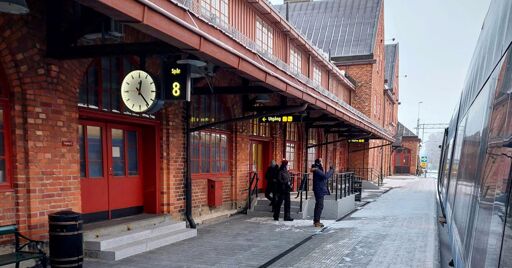
    First of all, I think it’s enforced differently in metro vs trams and trunk buses (where you don’t show the ticket to the driver, to save time) vs normal buses (where you do show the ticket to the driver, to reduce fare evasion and disorderly conduct). Here, we’re talking about a trunk bus, I think.

    Why do they employ ticket inspectors? To make random checks of ~1% of tickets to give people a concrete reason to buy a ticket instead of riding for free.

    Why is the penalty fare €100? It needs to be large enough to make people think they want to buy a ticket for every trip instead of paying the occasional penalty. (The actual amount is defined in a law.)

    Why do you have to buy the ticket early when paying in the app if you are boarding a trunk bus or tram? If you could first board and see whether there are inspectors onboard, you could decide to buy a ticket only in those 1% of cases and at the same time mostly avoid the risk of the penalty, so the penalty wouldn’t be useful anymore and people wouldn’t have the concrete reason to buy tickets anymore.

    Why is it not enough to order the ticket early? The timestamps they have (when you placed the order, when the doors closed, when you received the ticket) are not enough to check whether you bought the ticket before you boarded.

    Why do they require you to have received the ticket before the doors closed? They have the two timestamps to check whether this was the case, and the only way you can be sure that you meet this requirement is by not boarding before you have received the ticket.

    Why do they check the timestamps to the seconds? It can be a matter of seconds whether you had the time to first see the inspectors and then order the ticket before the doors closed.

    Could the system be more convenient and still efficient? Perhaps.

    Is there something you can do? If you are not reasonably sure you’ll have the mobile ticket before you board or before the doors close, buy a ticket onboard using a travel card or a payment card (which you can have on a phone virtually). (The rules and fares are different there.)

    Are there loopholes in the system? Maybe.


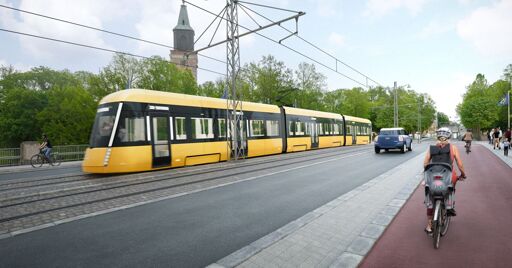
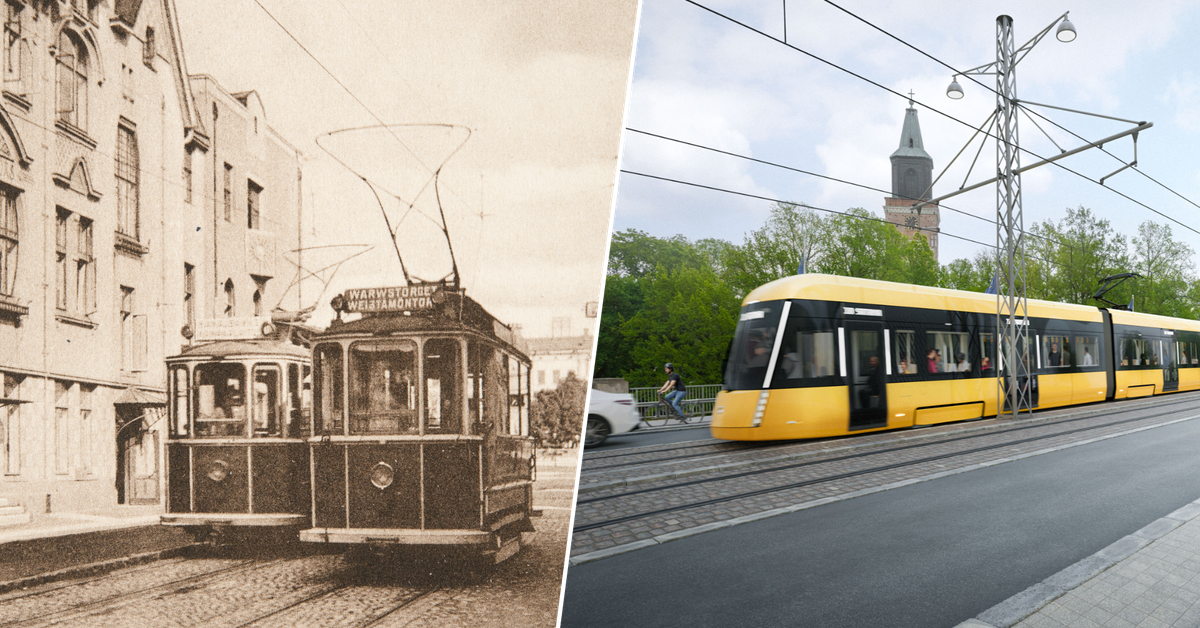
  • My understanding is that while the upfront investment is bigger, a tramway is cheaper to operate than a bus route with the same capacity. Also, when a bus route is upgraded to a tram line, the passenger counts and thus ticket revenues increase. Further, the value of the land around the tram line will increase, and the city can offset some or all of the investment with revenues from selling, renting or re-zoning land/buildings.

    Similarly, a tram costs more than a bus upfront, but a tram will last much longer and the drivers’ salary costs will be divided among a bigger number of passengers. [Also, trams have no fuel or battery costs!]

    Regarding Turku specifically: https://ratikkafaktat.fi/fi/fakta/95/


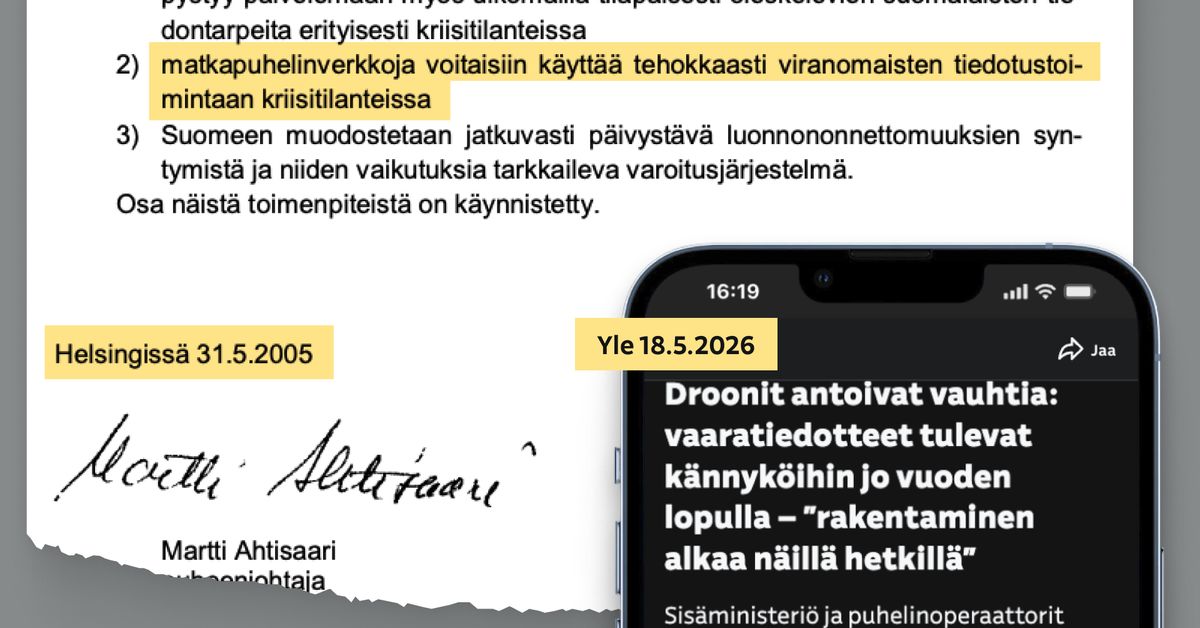
  • 112 Suomi -sovellukseen kehitetään uutta droonitoimintoa, ja tällaisia ominaisuuksia siihen toivottavasti tulee. Tällä hetkellä valmiussuunnittelu, tiedottamisen prosessit ja järjestelmät on niin heikolla tasolla, että tämä oli nyt parasta mihin Suomi pystyi. 🤦 Sisäministerikin nyt viimein herää vaatimaan, että FI-Alert olisi pitänyt olla valmis jo eilen, mutta jotenkin tilaus ei ole vielä mennyt teleoperaattoreille asti: https://yle.fi/a/74-20226652

    Paljon kertoo sekin, että aletaan ihmetellä pitääkö vaaratiedotteen kehotusta noudattaa. EK pääsee kertomaan, että heidän tietääkseen työntekijöille ei tarvitse maksaa palkkaa drooniuhan ajalta. 🤦 Tarvitaan työoikeuden emeritusprofessori kertomaan, että vaaratiedote on ylivoimainen este, jolloin työnantajan palkanmaksuvelvollisuus jatkuu 14 päivän ajan: https://yle.fi/a/74-20226482

    Ilmeisesti 112 Suomi -sovellusta ei myöskään ollut testattu kunnolla, kun nyt tulee yllätyksenä että vaaratiedotteet eivät kulje sen kautta luotettavasti. En ole vielä nähnyt ohjeita käyttäjille, että esim. sovellukselle pitää antaa erikseen lupa ohittaa Do Not Disturb -tila eikä puhelinta saa myöskään pitää äänettömällä, koska nämäkin asetukset estävät varoituksen kuulumisen. https://112.fi/-/paivita-112-suomi-sovellus-uusimpaan-versioon


  • Israel on oikeiston poliittinen suosikki, ei sen kummempaa. “Biisistä viis kunhan vasemmistoa harmittaa.” Äänestystapa on myös sellainen, että masinointi onnistuu helposti: äänestäminen ei ole ilmaista joten pitää olla joku syy (1,50€/ääni), mutta toisaalta jos haluaa käyttää rahaa Israelin eduksi niin ääniä voi antaa yhden sijaan periaatteessa rajattomasti (10 per puhelinliittymä + 10 per luottokortti). Ja suoraan Israelia vastaanhan ei ole mahdollista äänestää, vaan äänet hajaantuvat eri kilpailijoille ja pisteet sijoille 1-10.


  • Sijat 3-6 olivat pisteissä melko tasoissa (279-296), eli Suomi oli melkein jaetulla 3. sijalla Romanian, Australian ja Italian kanssa 🥳

    Miksi Bulgaria voitti selvällä äänierolla muihin? Se oli ainoa kappale josta sekä tuomaristot (mm. 12 pistettä ympäri Eurooppaa/maailmaa: Australiasta, Liettuasta, Maltalta, Tanskasta) että yleisö (jokaisesta maasta vähintään 4 yleisöpistettä) olivat innoissaan. Luulen että arvostivat uudenlaista musiikkia ja ehkä myös viittausta kansanperinteeseen tai sitten ihan viestiä “welcome to the riot!” https://eurovisionworld.com/eurovision/2026/bulgaria

    Miksi Suomi ei voittanut? Kovassa kilpailussa harva maa sijoitti Suomen esitystä top-3:een (samoin kävi Italiankin kappaleelle). Ehkä ajastaan jäänyttä musiikkia, jonka laskelmoitua ja mahtipontista esitystä (uudistetut) tuomaristotkaan eivät enää arvostaneet: 12 pistettä vain naapureilta (sekä tuomari- että yleisöpisteissä), 10 pistettä ei miltään tuomaristolta, vain muutamalta tuomaristolta edes 8 pistettä (Belgia, Norja, Saksa, Tanska). Yleisöpisteitä sentään 10 Australiasta, Latviasta ja Norjasta sekä 8 Armeniasta, Azerbaidžanista ja Tanskasta.


  • Piti tarkistaa - esim. tämmönen Googlen gemini-3.1-flash-live-preview näyttäisi järkevältä:

    Our low-latency, audio-to-audio model optimized for real-time dialogue with acoustic nuance detection, numeric precision, and multimodal awareness.

    Kutsujen hinnoittelu audio input $0.005/min, audio output $0.018/min, $0.014/tekoälyn käyttämä Google-haku. Yhteensä < $0.04 << €0.88. Ehkä tuollaiset palvelut ainakin halpenevat tulevaisuudessa.