Go to https://displate.com/l/matttt (discount is automatically applied at the checkout) or use my code matttt to get: 26% off for 1 Displates, 31% off for ...
In a capitalist system, especially the American entertainment industry, it’s completely unremarkable to be a capitalist, or to integrate money-making and industrial technique into a process of producing multiple films based on multiple source material.
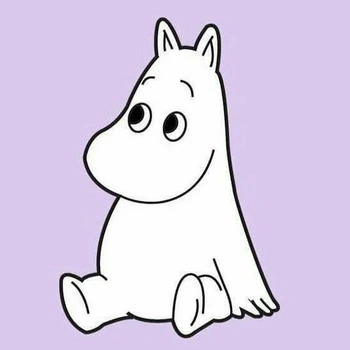
Yes. The remarkable one was Tove.
Let’s not pretend either that Disney had any deep resources or help upon that stuff-- he was literally building the whole thing up from scratch, risking his skin much of the time.
I didn’t say otherwise.
but the idea that Walt didn’t direct a tremendous amount of effort in to the aesthetic side of things is just naive.
Not what I said.
You don’t get masterpieces like Fantasia and Pinocchio and Snow White (etc) without taking major financial risks, which he indeed did on multiple occasions.
I didn’t say otherwise.
He established drawing and animation schools which became pretty-much the peak training standards for many years, and unleashed all kinds of creative forces and talents in to comics and animation since then.
Yes.
but to just hand-wave away his many achievements as little more than capitalistic imperative is plainly an obtuse reading of the situation to me, and unnecessary.
And not at all what I’m saying.
You’re acting like I think Tove is some saint that didn’t also build a multi-million media empire of her own.
They had flipped priorities, and you’re responding as if I’m claiming that people can only place importance on one thing at a time. But priority number two on the list is still pretty high.
I mean, fair enough? But on the whole, I found that a shockingly dismissive, cynical take on Disney, almost as if you were coming from a visceral place with all that.
And it’s all very well to recognise that I had some valid points there, but the reason I mentioned them at all is because you completely skipped that POV.
I’m claiming that people can only place importance on one thing at a time.
I found that to be the general tenor of your comment, yes. Maybe I misunderstand, and I apologise if so. I never thought I’d have to defend Walt Disney from someone as generally bright as you, yet here we are.
Just for the record, I absolutely despise modern Disney films. To me, most of them are hammy product primarily designed for American markets. I think maybe that started shifting from the time that Walt passed (1966), and only picked up steam in later decades.
You flew off the handle when I said Walt industrialised art.
Did he not do that?
You have valid points, only in that I never said anything that made making them necessary in the first place.
Maybe I misunderstand
You absolutely do. You’re arguing against points you assumed I held entirely on your own.
Walt had artistic integrity. But he was also more than happy to take the first steps in watering down artistic expression in order to widen the audience for profit.
I don’t think he would personally have taken things as far as they’ve gone, but he WAS prepared to engage in the kind of consolidation of IPs that has led to modern Disney.
The artist owning the art was only a sacred concept to him concerning the things HE made.
You flew off the handle when I said Walt industrialised art.
Geez, where did I do that? I think you’re projecting a bit there, mate.
I don’t think he would personally have taken things as far as they’ve gone, but he WAS prepared to engage in the kind of consolidation of IPs that has led to modern Disney.
I think that’s a fair argument, but not something he personally wanted. More accurate I think is to consider it more a feature of capitalism and late-stage capitalism, which eventually becomes a pitiless tyrant IMO. I know of no real evidence that Walt really wanted that.
The artist owning the art was only a sacred concept to him concerning the things HE made.
Again, to me that’s just an over-the-top reaction about the loving care (and harsh-ish discipline) he applied to all major projects under his supervision. He absolutely busted arse (and others’ arses) to pay tribute to the creators… to make their stuff shine, if not to tell their stories exactly in original form. But that’s not how cinema ever worked, anyway.
Maybe she just didn’t want to deal with the major hassle of having creative control of a movie that would have taken a couple years to produce. I could definitely see that.
A ‘maybe’ (IMO) is an implication that a person is exploring an idea of something, just like putting an idea out there to see how it floats. In any case, in no shape, or way did I do the following:
…suggest that Tove’s real reason for refusing him, was not being interested in working “that hard” to realize her vision.
That is hardly an outrageous paraphrasing. The reason I used it was illustrate a fairly obvious adverse interpretation of what you wrote, which you probably missed.
A ‘maybe’ (IMO) is an implication that a person is exploring an idea of something
He acquired the film rights for Winnie the Pooh from the authors widow. He spent 20 years pursuing P.L. Travers to acquire the film rights for Mary Poppins. He purchased the rights for Peter Pan from the Great Ormond Street Hospital, to whom J.M. Barrie had left them in 1939. He wanted Alice in the Wonderland starting in the 1920s, eventually securing the rights for the 1951 feature.


I said he was an artist second.
Not that he wasn’t one at all.
How is that naive or hand-wavy?
Yes. The remarkable one was Tove.
I didn’t say otherwise.
Not what I said.
I didn’t say otherwise.
Yes.
And not at all what I’m saying.
You’re acting like I think Tove is some saint that didn’t also build a multi-million media empire of her own.
They had flipped priorities, and you’re responding as if I’m claiming that people can only place importance on one thing at a time. But priority number two on the list is still pretty high.
I mean, fair enough? But on the whole, I found that a shockingly dismissive, cynical take on Disney, almost as if you were coming from a visceral place with all that.
And it’s all very well to recognise that I had some valid points there, but the reason I mentioned them at all is because you completely skipped that POV.
I found that to be the general tenor of your comment, yes. Maybe I misunderstand, and I apologise if so. I never thought I’d have to defend Walt Disney from someone as generally bright as you, yet here we are.
Just for the record, I absolutely despise modern Disney films. To me, most of them are hammy product primarily designed for American markets. I think maybe that started shifting from the time that Walt passed (1966), and only picked up steam in later decades.
*shrug*
You flew off the handle when I said Walt industrialised art.
Did he not do that?
You have valid points, only in that I never said anything that made making them necessary in the first place.
You absolutely do. You’re arguing against points you assumed I held entirely on your own.
Walt had artistic integrity. But he was also more than happy to take the first steps in watering down artistic expression in order to widen the audience for profit.
I don’t think he would personally have taken things as far as they’ve gone, but he WAS prepared to engage in the kind of consolidation of IPs that has led to modern Disney.
The artist owning the art was only a sacred concept to him concerning the things HE made.
Geez, where did I do that? I think you’re projecting a bit there, mate.
I think that’s a fair argument, but not something he personally wanted. More accurate I think is to consider it more a feature of capitalism and late-stage capitalism, which eventually becomes a pitiless tyrant IMO. I know of no real evidence that Walt really wanted that.
Again, to me that’s just an over-the-top reaction about the loving care (and harsh-ish discipline) he applied to all major projects under his supervision. He absolutely busted arse (and others’ arses) to pay tribute to the creators… to make their stuff shine, if not to tell their stories exactly in original form. But that’s not how cinema ever worked, anyway.
You then also proceeded to suggest that Tove’s real reason for refusing him, was not being interested in working “that hard” to realize her vision.
And when did I say that, matey?
A ‘maybe’ (IMO) is an implication that a person is exploring an idea of something, just like putting an idea out there to see how it floats. In any case, in no shape, or way did I do the following:
Not what I said at all, mate.
That is hardly an outrageous paraphrasing. The reason I used it was illustrate a fairly obvious adverse interpretation of what you wrote, which you probably missed.
Yes. A “suggestion” if you will.
He thought art could be bought and sold like stocks.
Or more importantly, that it should be.
Again, are you saying that is not the case?
Shit, is that right?
I’d certainly not known that, if so. Source?
He acquired the film rights for Winnie the Pooh from the authors widow. He spent 20 years pursuing P.L. Travers to acquire the film rights for Mary Poppins. He purchased the rights for Peter Pan from the Great Ormond Street Hospital, to whom J.M. Barrie had left them in 1939. He wanted Alice in the Wonderland starting in the 1920s, eventually securing the rights for the 1951 feature.
And he tried to buy out Tove.
And is it not, that’s how the IP process works?
Either via licensing or acquisition…?
Oh.
You’re misunderstanding me again.
I’m saying that Walt was not only ok with this being how it works, but that it is how art should work.