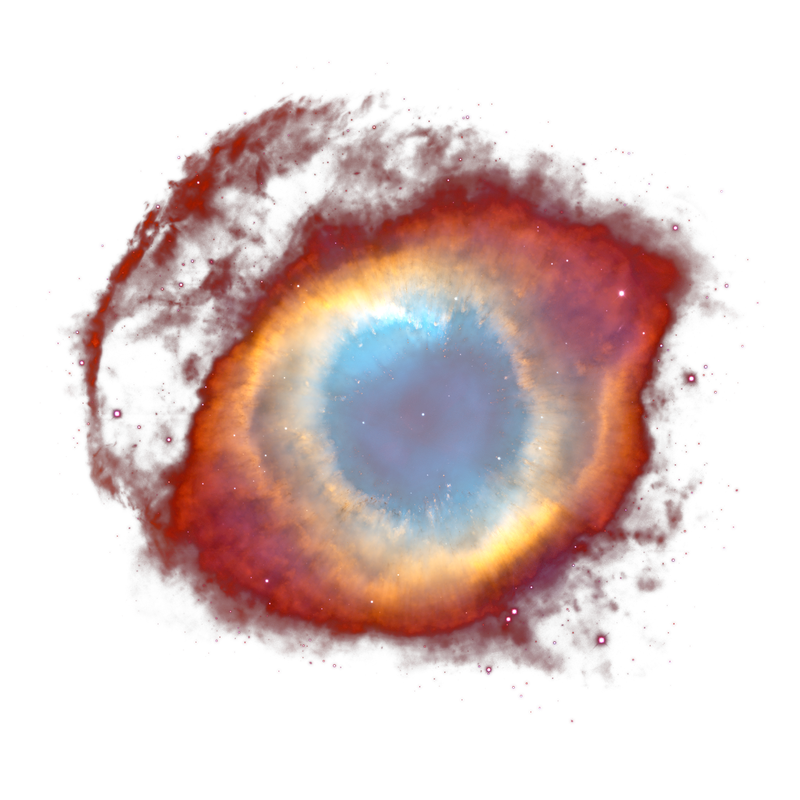
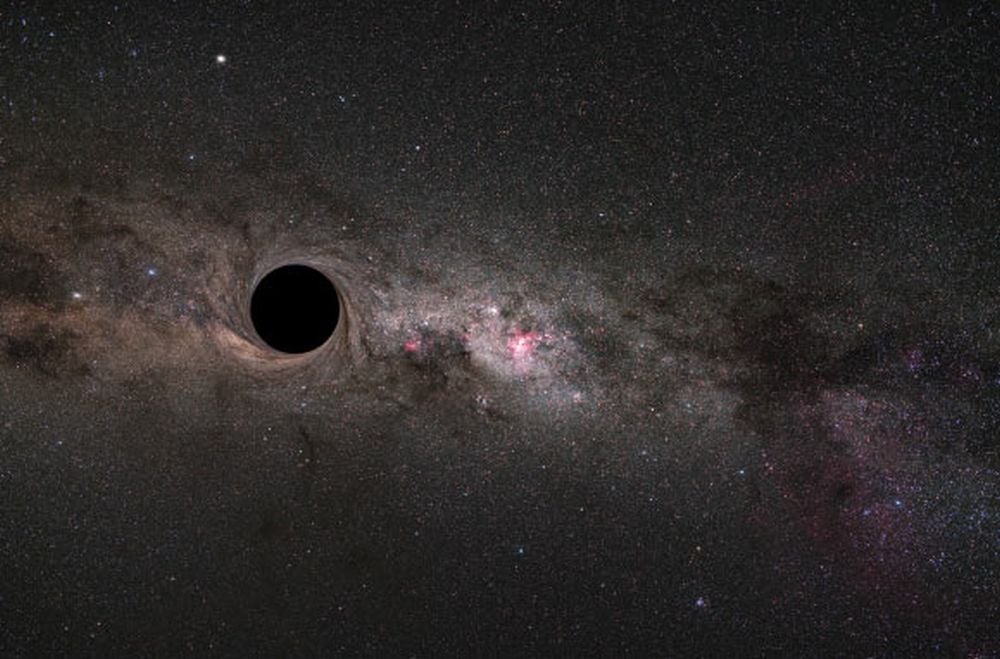
…Primordial black holes (PBHs) are only hypothetical, but they generate a lot of interest. If they’re real, they formed immediately after the Big Bang from direct collapse of dense clumps of subatomic matter, without the need for any stellar progenitor. Researchers have long thought that they could be the prime component, or even the only component, of dark matter…

This schematic shows a PBH passing through a white dwarf. As it passes through, its gravitational force creates tidal heating in the middle of the white dwarf. Once the material reaches the threshold temperature of <~0.5 billion Kelvin, it triggers uncontrolled nuclear burning. If the region burning is big enough, then thermonuclear runaway will trigger a Type Ia supernova. Image Credit: Kavli IPMU/Gemini AI (Banana Pro)…
Would the peak intensity of such a supernova match other Ia supernovae? In other words, would this affect distance measurements in space?
I wondered that same thing and did a bit of reading about it. My understanding is that Type Ia SNe’s are not all exactly the same brightness, but they can be normalized by measuring how long they take to fade.
From what I’ve read, a Type Ia SNe triggered by a PBH, compared to the usual trigger of accreting gas from a binary companion, would fade faster and observed brightness can be normalized to get an accurate distance measurement.
Great, thanks a lot!
Mixing Roman numerals with letters seems really silly.
Oh no! The supernovas are becoming French!
…what?
The other replies in this thread were somehow able to parse the stupid comment I made while incredibly sleep-deprived from insomnia. I’m kinda impressed
I was reading that as type (capital) i-a, so nothing made sense.
Type la supernova, I think.
I’d think that would be Spanish. It’s not type le
La is the feminine version of le in French too, and supernova is feminine in French, so la supernova is correct in French.