

cross-posted from: https://lemmy.sdf.org/post/59493937
Human rights and Taiwan are “red lines” for China that cannot be crossed, the country’s ambassador to the U.S. warned on Wednesday, ahead of President Xi Jinping’s arrival in Washington for a three-day summit.
Chinese Ambassador Xie Feng, writing in the ruling Communist Party’s official People’s Daily, said managing differences hinges on good faith, and the U.S. should stop “fabricating pretexts” such as national security, economic imbalances and forced labor to try to constrain China.
[…]
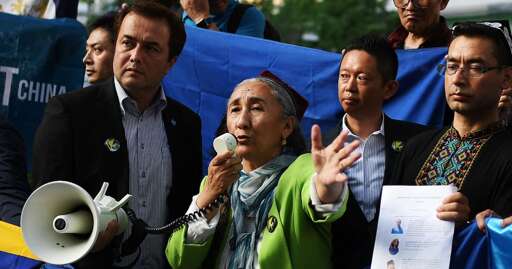
This is an interview with Rebiya Kadeer of the Washington-based International Uyghur Human Rights and Democracy Foundation (IUHRDF) for her reaction to China’s “red lines” statement ahead of Xi’s meeting with U.S. President Donald Trump.
[…]
Question: Why do you think Beijing issued this warning at this particular moment?
Rebiya Kadeer: The Uyghur genocide and human rights issue is China’s greatest vulnerability. It is also a crime that China has spent enormous financial resources attempting to conceal from the international community. At this important moment, when the world is paying close attention, China does not want this vulnerability to be exposed.
[…]
Ahead of Xi Jinping’s visit, several members of Congress called on President Trump to raise the cases of political prisoners—including Gulshan Abbas, Ilham Tohti, Rahile Dawut and Ekpar Asat—and demand their release. China knows that, in a democratic country such as the United States, the views of members of Congress carry weight and receive serious attention. Therefore, through this statement, China is attempting to pressure President Trump.
[…]
This is certainly not the kind of statement made by a strong country. China’s economic development is not healthy development; it has been built upon unfair competition and coercion. The stability China has established within the country, particularly in East Turkistan (Xinjiang in Chinese), is not natural stability—it is artificially imposed stability.
[…]
Although the Chinese government may appear strong, it is fundamentally weak. A government that fears its own people and is unable to embrace democratic elections is a fearful government. It is especially afraid of criticism.
[…]
Get a job