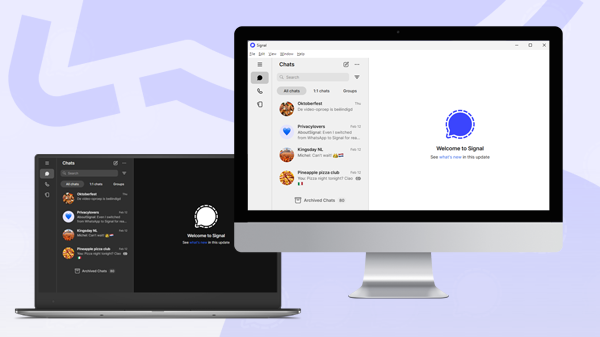
Signal is working on a standalone version of its desktop app that does not require a smartphone. Signal Desktop will also gain additional options when used as a linked device.
Signal’s end to end encrypted, yes… But we do the key exchange process through Signal’s servers, don’t we? How do we know they don’t store copies of the keys? Does the client have a mechanism in place to make sure the man in the middle doesn’t do anything funny? I haven’t actually delved very deep into the code, but it sounds like I should.
And… Sure, their server code may be open source too, but nobody guarantees that that’s the code actually running on their servers.
A US organization can be required by law to lie when they are contacted by the government under extreme penalties if they don’t do as they are told. There is no proof that Signal is really posting their real demands. They could be actually required to post everything except certain demands marked secret.
How do we know they don’t store copies of the keys?
I don’t know how Signal is built, but you can establish a secure communication channel through a channel that’s being listened in on, meaning the server doesn’t need to ever see the keys. Look up Diffie-Hellman for an example, an algorithm that lets two actors establish a shared secret without communicating enough information to reconstruct the secret.
So if the client uses a secure key exchange algorithm (or straight up asymmetrical encryption) the server can’t just grab your keys - you just need a secure way to verify that your keys actually match, because what they could do is a man in the middle attack where they establish a secure channel with you and the person you’re messaging, and decrypt and reencrypt messages going both ways, being able to listen in and modify messages.

You know, I’ve been thinking…
Signal’s end to end encrypted, yes… But we do the key exchange process through Signal’s servers, don’t we? How do we know they don’t store copies of the keys? Does the client have a mechanism in place to make sure the man in the middle doesn’t do anything funny? I haven’t actually delved very deep into the code, but it sounds like I should.
And… Sure, their server code may be open source too, but nobody guarantees that that’s the code actually running on their servers.
deleted by creator
A US organization can be required by law to lie when they are contacted by the government under extreme penalties if they don’t do as they are told. There is no proof that Signal is really posting their real demands. They could be actually required to post everything except certain demands marked secret.
I don’t know how Signal is built, but you can establish a secure communication channel through a channel that’s being listened in on, meaning the server doesn’t need to ever see the keys. Look up Diffie-Hellman for an example, an algorithm that lets two actors establish a shared secret without communicating enough information to reconstruct the secret.
So if the client uses a secure key exchange algorithm (or straight up asymmetrical encryption) the server can’t just grab your keys - you just need a secure way to verify that your keys actually match, because what they could do is a man in the middle attack where they establish a secure channel with you and the person you’re messaging, and decrypt and reencrypt messages going both ways, being able to listen in and modify messages.
They ship their app with blobs, so we cannot verify what their app is doing.