29·
4 days agoExcerpt:
Abdelwahab carried bodies from the wreckage, half-closing his eyes so the blood and devastation would not slow him down. He kept going even after the civil defence teams arrived.
“I wore a mask, but I could smell the smoke - and the dead,” he said.
He saw dead bodies of men, women, elders and toddlers. Among those killed was Nader Khalil, who had worked at Rifai Nuts for 35 years.
“He was a nice man. I knew him because he bought water from me every day,” Abdelwahab said. “What did he do to deserve this?”
Excerpt:
One resident of Ras Ein al-Auja in the southern Jordan Valley said harassment targeting his family forced him to leave.
“What pushed me to relocate was the harassment my wife, daughters and daughter-in-law were experiencing. Settlers began approaching the shelters when my son and I left for work,” he said.
“They were watching the women closely, whistling when women went out of the shelters in broad daylight and throwing stones at us at night. I was terrified that something bad might happen to my family because of this constant settlers’ violence when I was away.”
If you disagree tell me one thing about their culture that isnt genocide and rape. They steal too.
Excerpt:
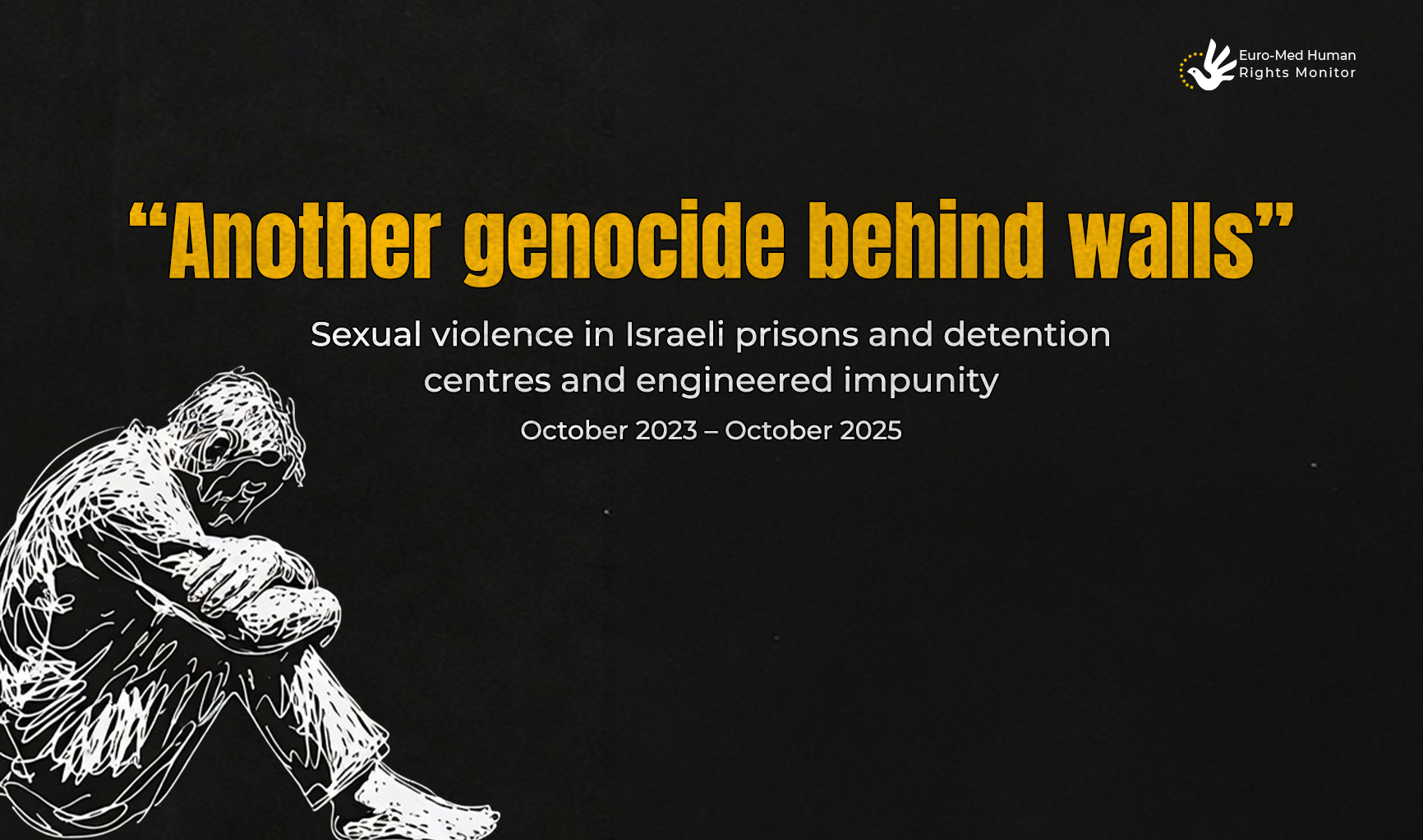
In this context, a former detainee’s testimony is particularly noteworthy. She is a 42-year-old woman from North Gaza, who was arrested in late October 2024 during her forced displacement from Beit Lahia in the northern Gaza Strip. She reported that abuse started at the moment of her arrest, involving deliberate humiliation such as forcibly removing her hijab and leaving her exposed in freezing conditions, while being the only woman among dozens of male detainees.
The woman recounted that she was later transferred to the Sde Teiman camp, where she was forced at gunpoint to strip completely. Soldiers deliberately uncovered her eyes for brief moments so she could witness two soldiers photographing her naked with their phones, combining humiliation with coerced documentation and the attendant risks of public shaming and blackmail. She added that the abuse peaked on the third day of detention, when four masked soldiers took her to a small room containing a metal table fixed to the floor and equipped with surveillance cameras. There, she was shackled to the table and stripped, while two soldiers took turns violently raping her, and the other two documented the assault on film.
The rape and sexual violence were repeated. The detainee stated that she was left bound, naked, and bleeding throughout the night, before the soldiers returned the following day and repeated the assault. She confirmed that she was raped four times over two consecutive days, twice on each day, before being left completely naked in the room, still watched and filmed through the door.
She further testified that the torture later intensified, involving humiliation, coercion, and blackmail. She was moved to another interrogation room, suspended by her hands, and subjected to repeated electric shocks until she lost consciousness, while being shown photos of her rapes and nude images, and threatened with their publication if she did not “cooperate” with Israeli intelligence. This account from the victim suggests that sexual violence was employed as a means to subjugate and break her spirit. Non- consensual recordings were used for blackmail and threats of exposure, aiming to silence her, deter reporting or seeking justice, and create fear both within and outside the detention setting.
Describing the systematic terror she faced, the victim explained that she used to scream unheard, wished for death rather than remaining bound within their reach, and called her experience “another genocide behind walls.” She mentioned losing track of time in prison, recognising only the number “101,” given by the soldiers instead of her name, symbolising the erasure of identity and the dehumanisation within the detention system.
They seem to still believe in the discredited Biden era philosophy that if you simply do good things people will notice.
Good things like supporting genocidal ethnostates or signing bills to make worker strikes illegal?

Recently, a law passed in California that heavily censors pro-Palestinian / Anti-Zionist narritives being taught in schools.
https://calmatters.digitaldemocracy.org/bills/ca_202520260ab715
I want you to take a look at the following tabs:
It is hard to believe that Zionists are not one of the primary drivers of US politics.
Photos said to show Beaulieu on the terrace of the property show her in a black suit, white shirt, black tie, black trilby hat and black Wayfarer sunglasses like the characters in the hit 1980 action movie.
Neighbors along on The Strand regularly saw Doukoullos relaxing on his front porch, overlooking Manhattan Beach and the Pacific Ocean.
But when he stopped coming out for weeks and the blinds stayed closed, they began to worry. Then they saw a strange man in a suit and fedora coming and going.
Then his upstairs neighbor smelled a foul odor coming from the unit and a suspicious person was in the unit, and called the landlord.
‘With the assistance of the landlord or the realtor, they granted us access to go inside and they located somebody that was inside that did not match the description of the resident.’
So she killed him, and stayed in the residence for a week? Why?
Ali and Waad Bani Odeh’s four children were showing off the new clothes they had just bought for the upcoming Eid celebrations as their parents drove home from Nablus in the northern West Bank to their house in the town of Tammun, south of Tubas.
The children joyfully described the colours and styles of their outfits to their visually impaired brother, Othman. Ali glanced back at his children and smiled at his wife, sharing a rare moment together, as his work often kept him away from his family.
It was a perfect Saturday evening for the Palestinian family, violently interrupted when undercover Israeli special forces suddenly peppered the car with bullets, killing the parents and two of their children.
Ali, 37, Waad, 35, and their children, Mohammad and Othman, aged five and seven respectively, were each shot in the head. Only Mustafa, eight, and Khaled, 12, survived, though they sustained shrapnel wounds to the face and head.
The Israeli forces, travelling in a civilian car, opened fire as soon as Ali’s vehicle reached the western part of Tammun.
Soldiers then approached the car, opened the doors and found the two children still alive. They dragged them out of the vehicle.
Khaled told reporters that soldiers ordered them to lie on the ground in the cold and rain while they were questioned. They were then made to stand against a wall with their hands raised and searched.
Mustafa, frightened and in shock, asked to go to the toilet, so a soldier took him to another location. On the way, Mustafa recounted, the soldier opened the car doors again and forced him to look at the bodies of his bleeding family before laughing.
“They kept us with them and ordered us to remain still after searching us. They beat us, kicked us and cursed and laughed at us,” Khaled said.
"They asked where we had been, and I told them we had gone to Nablus to buy Eid clothes. They accused me of lying and beat me.
“Then I gathered the courage to ask one of the soldiers, ‘Do you love your mother and father?’ He said, ‘Of course.’ I asked, ‘Then why did you kill mine?’ He punched me in the face.”
According to an education ministry spokesperson, the destruction was so severe that 69 schoolgirls are yet to be identified and their remains are currently undergoing DNA testing.
One of the Red Crescent medics described the scene as “unbelievable”.
“We saw bodies without heads, without hands, without legs,” he said.
The medic described dozens of severed limbs scattered around the school grounds. Some children were so badly burned that identifying them was extremely difficult.

What the fuck?
An Industrialized Genocide
Anatomy of the bombs
The investigation identified specific US-manufactured munitions used in Gaza that are linked to these disappearances:
MK-84 ‘Hammer’: This 900kg [2,000lb] unguided bomb packed with tritonal generates heat up to 3,500C [6,332F].
BLU-109 bunker buster: Used in an attack on al-Mawasi, an area Israel had declared a “safe zone” for forcibly displaced Palestinians in September 2024, this bomb evaporated 22 people. It has a steel casing and a delayed fuse, burying itself before detonating a PBXN-109 explosive mix. This creates a large fireball inside enclosed spaces, incinerating everything within reach.
GBU-39: This precision glide bomb was used in the al-Tabin school attack. It uses the AFX-757 explosive. “The GBU-39 is designed to keep the building structure relatively intact while destroying everything inside,” Fatigarov noted. “It kills via a pressure wave that ruptures lungs and a thermal wave that incinerates soft tissue.”
I read a translation of the article.
I want to throw up.

IIRC he married an Israeli and moved to a house in the occupied territories.
March 28, 2012: IDF colonel-rabbi implies: Rape is permitted in war
June 8, 2014: PHOTO: Soldier punches Palestinian activist in the face
July 31, 2015: Palestinian baby burned to death in West Bank arson attack
July 31, 2016: A year since the Duma murders: Navigating justice and pain
December 5, 2016: Supreme Court rules against exposing Israel’s role in Bosnian genocide
October 12, 2020: For Israel, tens of thousands of Palestinian newborns don’t exist
June 8, 2021: Settlers shot Palestinian and mutilated his body as he lay dying
July 15, 2021: Joint militias: How settlers and soldiers teamed up to kill four Palestinians
April 5, 2022: Israel charges Palestinian journalists with incitement — for doing their jobs
April 10, 2022: Israel’s false promise of security
May 15, 2022: In photos: Returning to Palestine’s depopulated villages
May 25, 2022: Israel says this book justifies Masafer Yatta expulsions. Its author begs to differ
June 22, 2022: Israel wiped out a Palestinian-German family. Germany refuses to investigate
July 8, 2022: This Israeli forbids Palestinians from building. He lives in an illegal outpost
July 11, 2022: Classified document reveals IDF ‘firing zones’ built to give land to settlers
August 11, 2022: ‘We killed a little boy, but it was within the rules’
August 30, 2022: Israel destroyed Palestinian village for luxury settlement that was never built
September 15, 2022: How Israeli media reported a ‘lynching’ that never happened
September 19, 2022: Armed settlers assaulted a Palestinian man. Guess who’s in jail?
September 26, 2022: ‘We built the Palestinian Authority with blood. We won’t give up on it’
November 8, 2022: “He asked me how many children I have. Then he said: ‘Now you have one less.'”
October 5, 2022: In Jenin and Nablus, resistance and despair go hand in hand
January 24, 2023: A coming out party for Israel’s religious Jewish left
February 16, 2023: The theft of Harun Abu Aram’s body, home, and life
February 27, 2023: The pogrom is the point
March 2, 2023: ‘They were burning our house with kids inside. The army didn’t let us through’
March 5, 2023: ‘I couldn’t see if my brother’s murderer was a soldier or settler’
March 13, 2023: ‘Who hits a 64-year-old woman with a bat?’
March 22, 2023: Armed settlers break into Palestinian family home under cover of darkness
May 3, 2023: Revealed: The IDF unit turning ‘hilltop youth’ settlers into soldiers
August 31, 2023: ‘It’s like 1948’: Israel cleanses vast West Bank region of nearly all Palestinians
November 13, 2023: How a hasbara group’s sham investigation put Gaza journalists in the firing line
November 23, 2023: What Israelis won’t be asking about the Palestinians released for hostages
November 30, 2023: A mass assassination factory’: Inside Israel’s calculated bombing of Gaza
December 8, 2023: ‘It would’ve been better if they shot us’: Palestinians recount prison abuse
December 11, 2023: ‘Diseases are spreading rapidly’: In Jabalia camp, thousands shelter in one school
December 19, 2023: Gaza’s rescue workers are haunted by those they couldn’t save
December 19, 2023: A Palestinian student briefly deleted her social media. Israel revoked her permit
December 28, 2023: Palestinian Christians in Gaza fear being ‘swept under the rubble or into the desert’
January 2, 2024: The ‘second Nakba’ government seizes its moment
January 5, 2024: Inside Israel’s torture camp for Gaza detainees
January 8, 2024: Israel is using a notorious military tool to arrest its own Palestinian citizens
January 9, 2024: The ‘mistaken’ killing of three Israeli hostages was a tragedy long foretold
January 24, 2024: Israeli police repressing anti-war protests with ‘iron fist,’ say activists
January 30, 2024: ( Turning Zeitoun into Shivat Zion: Israeli summit envisions Gaza resettlement
January 31, 2024: ‘My children are crying from hunger. This is a war of starvation’
February 6, 2024: Palestinians abused, forced to chant anti-Hamas slogans in ‘safe corridor’
February 9, 2024: How Israel turned a teacher into a traitor
February 10, 2024: Body of 6-year-old killed in ‘deliberate’ Israeli fire found after 12 days
February 14, 2024: Israel is surveilling U.S. data on settler attacks to thwart sanctions, sources reveal
February 17, 2024: The obliteration of Gaza’s multi-civilizational treasures
March 5, 2024: Survivors of Gaza aid convoy massacre describe ‘indiscriminate’ Israeli fire
March 8, 2024: A new surge of settler outposts is terrorizing Palestinians off their land
March 16, 2024: ‘We scream, starve, and die alone’: Life in the ruins of Shuja’iya
April 3, 2024: ‘Lavender’: The AI machine directing Israel’s bombing spree in Gaza
June 13, 2024: ‘How is it reasonable to kill over 200 for the sake of four?’
June 20, 2024: A settler shot my husband. Then Israel bulldozed my childhood home
June 25, 2024: How Israeli drone strikes are killing journalists in Gaza
June 26, 2024: ‘The livestream was critical evidence’: Tracing attacks on Gaza’s press buildings
June 27, 2024: ‘More horrific than Abu Ghraib’: Lawyer recounts visit to Israeli detention center
July 8, 2024: ‘I’m bored, so I shoot’: The Israeli army’s approval of free-for-all violence in Gaza
July 10, 2024: Israel ordered thousands to ‘safe’ areas in Gaza City — then bombed them
September 23, 2024: Settlers attacked Bana’s village. Then a soldier shot her through her window
December 9, 2024: Israeli soldiers systematically abusing Palestinians in Hebron, report reveals
1/30/2026: https://www.972mag.com/settler-soldier-pogrom-masafer-yatta/
This conflict has spanned for decades and has spread so far. Learning about every little thing has been overwhelming enough. Finding a way to organize that information is no easy task either. This comment will be used as an anchor to showcase a plethora of information regarding the conflict, both in background and the present. I still don’t know if it should be organized by news source or events themselves; maybe it will be a mix.