

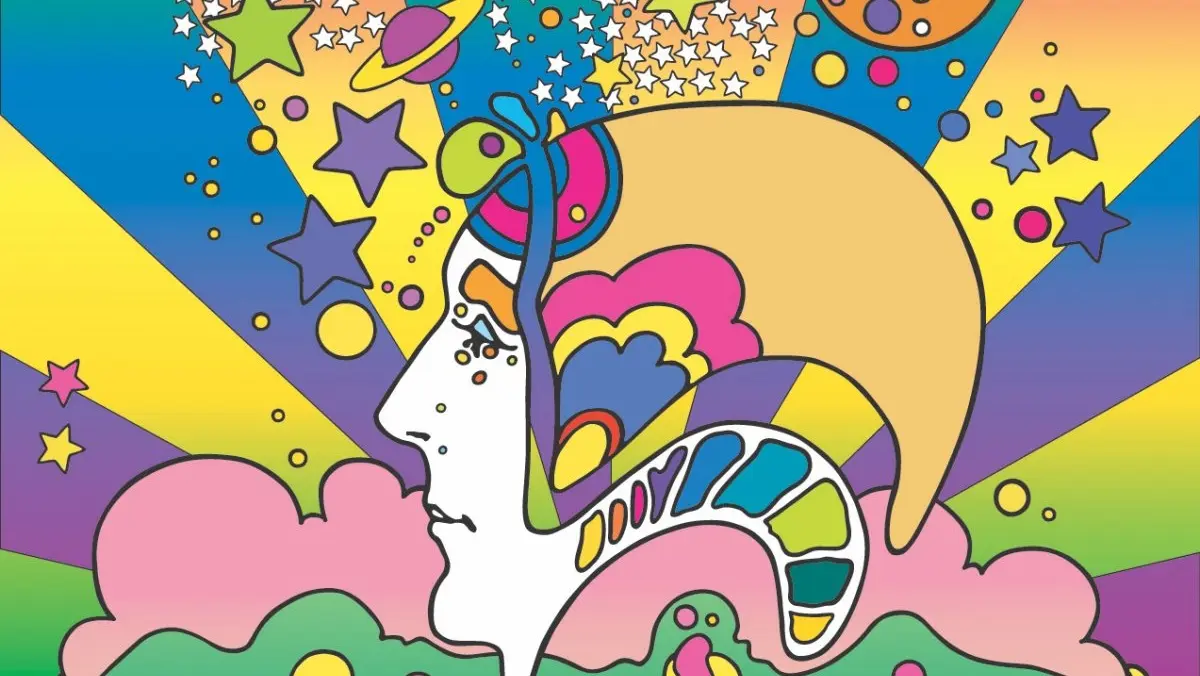
His psychedelic designs and vivid posters became synonymous with 1960s pop culture.
The U.S. artist Peter Max died at 88 in a New York hospital on Monday, as informed by his son. Although the cause was not reported, he had not been seen in public for many years because of advanced dementia.
RELATED:
U.S. Voting Rights March Revives Martin Luther King’s Legacy
His work, synonymous with 1960s pop culture, illustrated the 1994 World Cup, two Super Bowls and the 2000 World Series, or “Subway Series,” between the New York Yankees and Mets. He also designed a Norwegian Cruise Line ship, a Boeing 777 and six editions of the Grammy Awards, and his work was immortalized on a U.S. Postal Service stamp.
His butterfly, rainbow, star and planet designs from the 1960s “flower power” movement offered instant visual gratification and a cheerful endorsement of the generation’s politics of love, joy and universal consciousness. His “panoptic” images repeated visual elements in a tight formation, producing a kaleidoscopic effect reminiscent of Eastern mandalas.
Born Oct. 19, 1937, in Berlin, Max arrived in New York with his family in 1953. He began painting in a realistic style, then moved to abstraction and eventually made a name for himself in commercial art.
His first job came from Riverside Records to design the cover of the album “The Blues Piano Artistry of Meade Lux Lewis,” released in 1962. His portrait of Lewis at the piano was awarded a gold medal at the Society of Illustrators’ annual exhibition.
Pop artist Peter Max, whose dreamy, boldly colored works provided an artistic backdrop for the 1960s US hippie movement and made him a commercial art powerhouse, died on September 14 at the age of 88 https://t.co/WwvV6dbVvy pic.twitter.com/Qi5gBsmZ1j
— Reuters (@Reuters) September 17, 2026
He later founded a design company that won several awards in just two years, but Max left it in 1965 and was practically confined to his Manhattan home for two years, during which he produced thousands of drawings and ideas.
In 1967, the artist began putting his new ideas onto canvas in a city restaurant whose decor included scenes from Charlie Chaplin films, and his advertising work began to attract attention and increase his popularity.
In 1968, a public transportation advertising company asked him to design posters for buses, streetcars and subways in 10 major cities. In 1970, he closed his studio. “I was repeating myself creatively. I had become saturated with being everywhere and doing everything. I had had enough,” the artist said at the time, gradually returning to art.
In 1976, for the country’s bicentennial, he created the commissioned book “Peter Max Paints America,” which included paintings and drawings of all 50 states. He later created a series of bilingual signs bearing the message “Welcome to the United States,” which were placed at 200 locations at border crossings between Canada and the U.S.
His extensive body of work also includes portraits of U.S. presidents John Fitzgerald Kennedy and Barack Obama, music stars and other figures such as Nelson Mandela, as well as one of his best-known images, the Statue of Liberty, which he painted in 1976.
teleSUR/ JF
Source: EFE
From teleSUR English via This RSS Feed.