

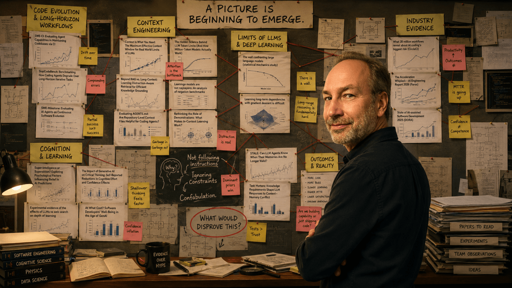
studies show a clear trend – output is up (more code, more commits, bigger diffs), but outcomes don’t reflect that trend. If anything, the average team is taking longer to ship worse software
studies show a clear trend – output is up (more code, more commits, bigger diffs), but outcomes don’t reflect that trend. If anything, the average team is taking longer to ship worse software
Lol that’s funny. My belief in having a divinely created soul is exactly why I think humans can’t be replaced by these supercharged drunken parrots. :O
…But yeah this is probably referring to the ones who, under the right conditions, will start to sense “ghosts in the machine” and go down the rabbit hole to chatbot psychosis…
I am 100% genuinely not trying to start a fight, this a legitimate question to which I really would like to know the answer.
What is the difference between a divine creation and the "ghost in the machine "?
I will give context , faith is genuinely confusing to me.
I have no issue with personal faiths unless you are trying to force everyone to have the same faith as you.
I consider anything above small scale organisation of religion to be the worst thing that can happen to faith, because people are people and power corrupts.
I suppose my real question is , for a concept that prohibits proof as part of it’s definition, how do you determine that one faith (or system) is better than another?
I’m not the person you responded to, but I can try to take a stab at that…
Objectively, you don’t. But people’s experiences go beyond the objective, and we all have our subjective experiences too. Faith is how we make sense of those.
The question then isn’t, which one is better, but whose other experiences and faiths do we relate to? We build friendships and alliances based on those. Not because they’re better, per se, but because we feel comfortable or safe with them.
From that perspective it makes a lot of sense that we value other humans, because they can make us feel understood and appreciated, and we can exchange ideas with them which in turn refines our faith. Now, some people get tricked into thinking you can do the same with machines, but well, I think you can guess where I too stand on that idea.