
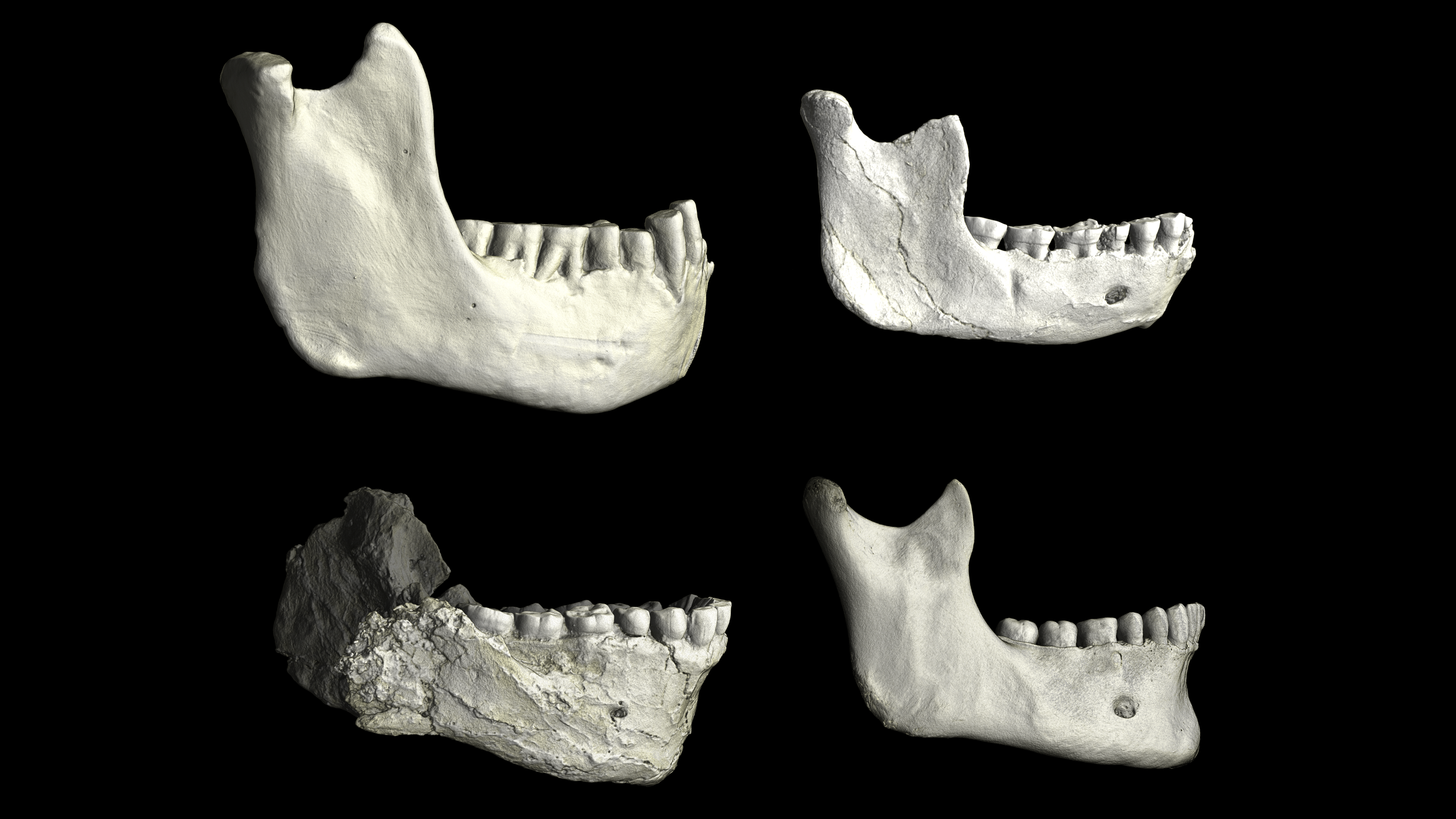
In the research, published Wednesday (Jan. 7) in the journal Nature, a team of Moroccan and French researchers detailed their analysis of a handful of bones they think represent the last common ancestor of modern humans (Homo sapiens), Neanderthals and Denisovans.
The researchers discovered the fossils in a cave called Grotte à Hominidés (Cave of Hominids) at the site of Thomas Quarry I in Casablanca, Morocco. The bones consist of three partial lower jaws, several vertebrae and numerous individual teeth, all of which share some characteristics of Homo erectus but also have traits distinct from this human ancestor.
You must log in or # to comment.