
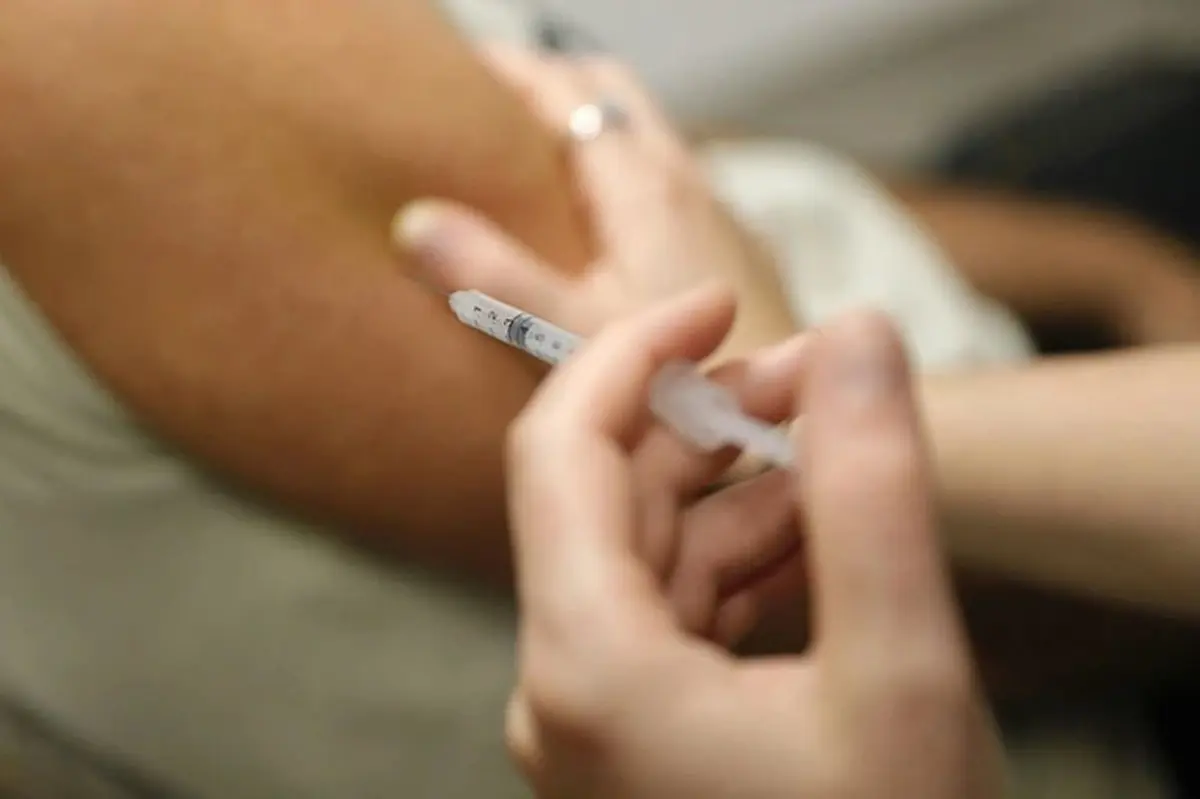
On Monday, Mexican President Claudia Sheinbaum announced an agreement between the Health Secretary, Biological and Reagent Laboratories of Mexico (Birmex), Liomont, and Moderna to produce messenger RNA (mRNA) vaccines in Mexico.
The agreement not only includes vaccines against COVID-19, but also joint scientific research projects to develop biologics against dengue and cancer, strengthening Mexican biomedicine.
The announcement comes amid a measles outbreak with 8,459 accumulated cases and 2,027 registered in 2026, which makes Mexico the country with the most infections in the Americas.
Sheinbaum highlighted that Moderna, a pioneering U.S. company in messenger RNA vaccines against Covid-19, will partner with Liomont, a Mexican laboratory with experience in biotechnology, and Birmex, a state institution dedicated to biologics.
Mexican Health Secretary David Kershenobich highlighted the importance of having mRNA infrastructure and technology to address various diseases and strengthen the Mexico Plan.
Liomont already collaborated in 2021 with the Carlos Slim Foundation and Argentina’s mAbxience to produce more than 80 million doses of the AstraZeneca vaccine, distributed in Mexico and 10 Latin American countries.
MRNA vaccines use genetic instructions for cells to produce proteins of the pathogen, which activate the immune system without live viruses. This allows for rapid development and proven safety in clinical trials.
Specialists indicate that this technology is effective and safe, although it requires specific storage conditions due to the instability of RNA. It has been applied to COVID-19, influenza, HIV, and various types of cancer.
According to Sheinbaum, the agreement includes technology transfer and the creation of scientific development hubs to turn Mexico into a “scientific and biological power.”