

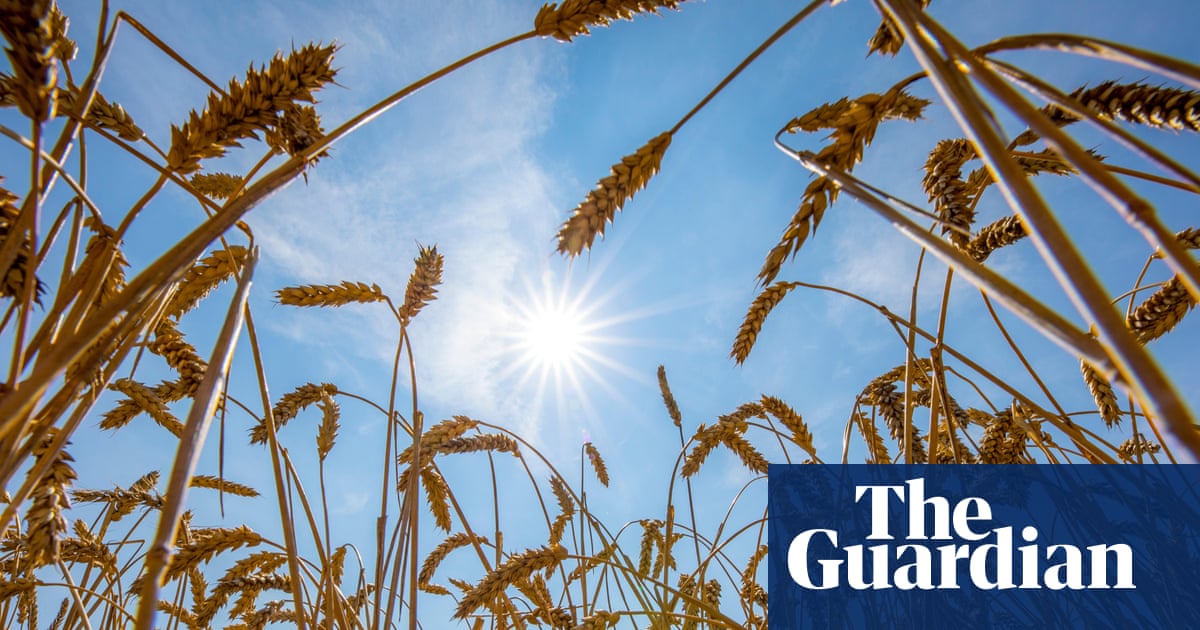
Extreme heat is threatening the world’s food systems, with farmers unable to work outside, livestock experiencing stress and crop yields falling, putting the livelihoods of more than a billion people in peril, the UN has warned.
Experts said food supply in some areas was being “pushed to the brink” by increasingly common and severe heatwaves, on land and at sea, in a major report written jointly by the Food and Agriculture Organization (FAO) and the World Meteorological Organization (WMO).
Farmers could find it impossible to work safely for as many as 250 days of the year – more than two-thirds of the time – in already hot regions including much of India and south Asia, tropical sub-Saharan Africa and swathes of Central and South America.
Livestock are already experiencing an increase in mortality rates, as heat stress begins for common species at about 25C. Extreme heat reduces yields from dairy cows and cuts the fat and protein content of milk. Pigs and chickens are unable to sweat and, as temperatures rise, face digestive tract breakdowns, organ failure and cardiovascular shock.
Yields begin to decline at temperatures above 30C for most agricultural crops, with damage including weakened cell walls and the production of toxins. The yields of maize in some areas have declined by about 10%. Wheat has fallen by nearly as much, and is projected to decline further as temperatures rise to more than 1.5C above preindustrial levels.
This is the time to begin learning about community gardens (or starting one!) in your area. Urban agriculture is a solution, and growing local food sources that are maintained by your neighborhood will ultimately be a necessary stop gap.
I’ve seen nonprofits successfully go to their municipalities and propose to buy a plot of land that is underutilized and turn it into a thriving garden, maintained by volunteers they manage.
It’s not a fail proof solution, but it is an adaptation that works. If we’re unable to grow due to extreme heat, or can’t ship goods due to rising costs, crop failure, or supply chain deterioration, what better way to use your free time than support a community garden!
