Transportation is a tiny portion of any agricultural emissions, it’s really producing it in the first place that matters. If global consumption levels don’t reduce, then this is just an accounting shell game with emissions happening elsewhere
Transport is a small contributor to emissions. For most food products, it accounts for less than 10%, and it’s much smaller for the largest GHG emitters. In beef from beef herds, it’s 0.5%.
Not just transport, but all processes in the supply chain after the food left the farm – processing, transport, retail and packaging – mostly account for a small share of emissions.
This data shows that this is the case when we look at individual food products. But studies also shows that this holds true for actual diets; here we show the results of a study which looked at the footprint of diets across the EU. Food transport was responsible for only 6% of emissions, whilst dairy, meat and eggs accounted for 83%.
New Zealand needs larger reduction in cattle sizes than just a 10x in many areas for other environmental impacts. For instance, the dairy production in Canterbury is so high that there needs to be a 12x reduction in size to keep water at safe drinking levels because of its nitrate pollution
The large footprint for milk in Canterbury indicates just how far the capacity of the environment has been overshot. To maintain that level of production and have healthy water would require either 12 times more rainfall in the region or a 12-fold reduction in cows.
I suspect that the transport costs for NZ exports are much higher than the global or EU average because we are really far away from everyone else, also we don’t get the bigger more efficient ships.
Also, Canterbury and Waikato share more of the cattle burden than the rest of the country so they’d need a much bigger drop to compensate.
Shipping is generally a lot more efficient per kg than you would think. For instance the article looked at 9000 km boat transportation for beef
Transporting food by boat emits 23 grams of CO2eq per tonne of product per kilometer. Transporting the 9000 kilometers from Central America to the UK, therefore, emits 0.207 kilograms CO2eq [9000km * 23g per tonne-kilometer / 1000 / 1000 = 0.207 kg CO2eq per kg]. This is equivalent to 0.35% of the total footprint of 60 kilograms of CO2eq per kilogram of beef.
We could change that to be New Zealand to Iceland (on the complete top of the globe and far away laterally too), but we’d still find it’s a small portion of emissions. We’d bump up our distance to 15900 km or so meaning ~1.76x more distance than what they did the math on, putting it at ~0.6-0.7% of total beef emissions. Still not a significant driver compare to eating beef in the first place


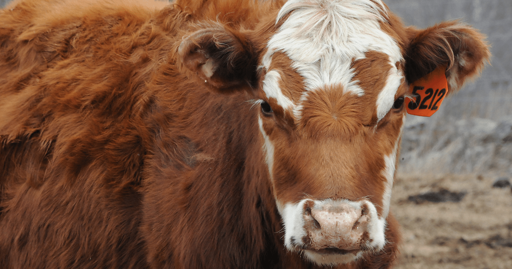
Transportation is a tiny portion of any agricultural emissions, it’s really producing it in the first place that matters. If global consumption levels don’t reduce, then this is just an accounting shell game with emissions happening elsewhere
https://ourworldindata.org/food-choice-vs-eating-local
New Zealand needs larger reduction in cattle sizes than just a 10x in many areas for other environmental impacts. For instance, the dairy production in Canterbury is so high that there needs to be a 12x reduction in size to keep water at safe drinking levels because of its nitrate pollution
https://theconversation.com/11-000-litres-of-water-to-make-one-litre-of-milk-new-questions-about-the-freshwater-impact-of-nz-dairy-farming-183806
I suspect that the transport costs for NZ exports are much higher than the global or EU average because we are really far away from everyone else, also we don’t get the bigger more efficient ships.
Also, Canterbury and Waikato share more of the cattle burden than the rest of the country so they’d need a much bigger drop to compensate.
Shipping is generally a lot more efficient per kg than you would think. For instance the article looked at 9000 km boat transportation for beef
We could change that to be New Zealand to Iceland (on the complete top of the globe and far away laterally too), but we’d still find it’s a small portion of emissions. We’d bump up our distance to 15900 km or so meaning ~1.76x more distance than what they did the math on, putting it at ~0.6-0.7% of total beef emissions. Still not a significant driver compare to eating beef in the first place
Cool, nice to have figures!