
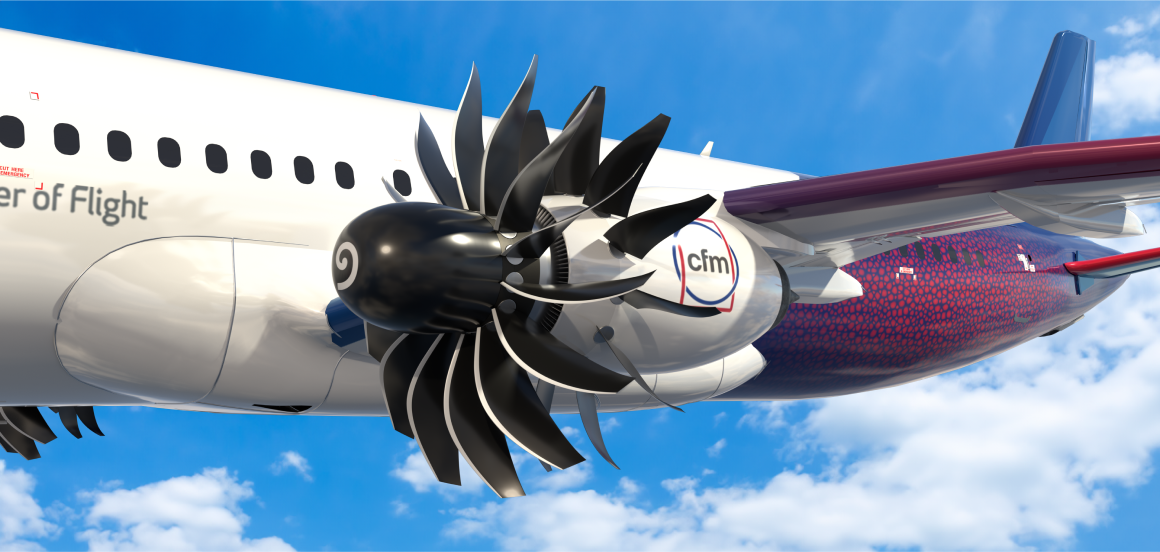
NASA did work on turboprops being much more efficient than turbofans, years ago.
2 things I remember from their paper ( 1 of zillions: trying to re-find a particular paper can waste days )…
- blade-flutter can destroy the thing, at those high-speeds & high-energies
- the MORE blades, within limits, the more efficient, & that was measured, so near-transonic props seem to behave DIFFERENTLY than low-subsonic ones do ( where fewer blades == more efficient )
Generally, the lower the pressure-difference between the suction-side & the pressure-side of a prop-disc ( because you made the prop-disc bigger ), the greater the efficiency, you ideally want the speed-difference of the air to be limited between before & after, to something like 7x or less, AND you have to limit the suction-side-of-the-blade air to below transonic, or the shockwave can damage your blade,
so using an open rotor/fan, with MUCH bigger prop-disc, should be a no-brainer…
I know Boeing was researching into it, & them & Airbus both seem to have decided that slipstream-straightening blades/vanes, just behind the fan, gets enough spiral-energy converted into straigh-back energy, that it’s worth doing
( as opposed to the massively-more-complicated counter-rotating props ).
You can see those flow-straighteners sticking out of the nacelle ( that isn’t idiotic-AI-bogosity: that isn’t a 2nd-prop, that is flow-straightening vanes )
I suspect that Hondajet-style engine OVER the wing would be required, … to get the things far-enough from the ground…
… but then you have a different problem: in a go-around situation, where you HAD been landing, but now you need to be climbing…
with engines above the wings, when you increase thrust, now you nose-down.
Which would need countering, just right, EVERY time.
It’s Airbus, though, so they’ll probably put some software system in to do that for the pilots?
Just some things which normals wouldn’t have noticed, so you can get more understanding out of what’s going-on, is all…
_ /\ _